


Technology has always been closely connected to the development of the iGaming industry. From the early days of browser-based gaming to today’s mobile-first platforms, technological improvements have continuously changed how gaming businesses build platforms and how users interact with digital entertainment.
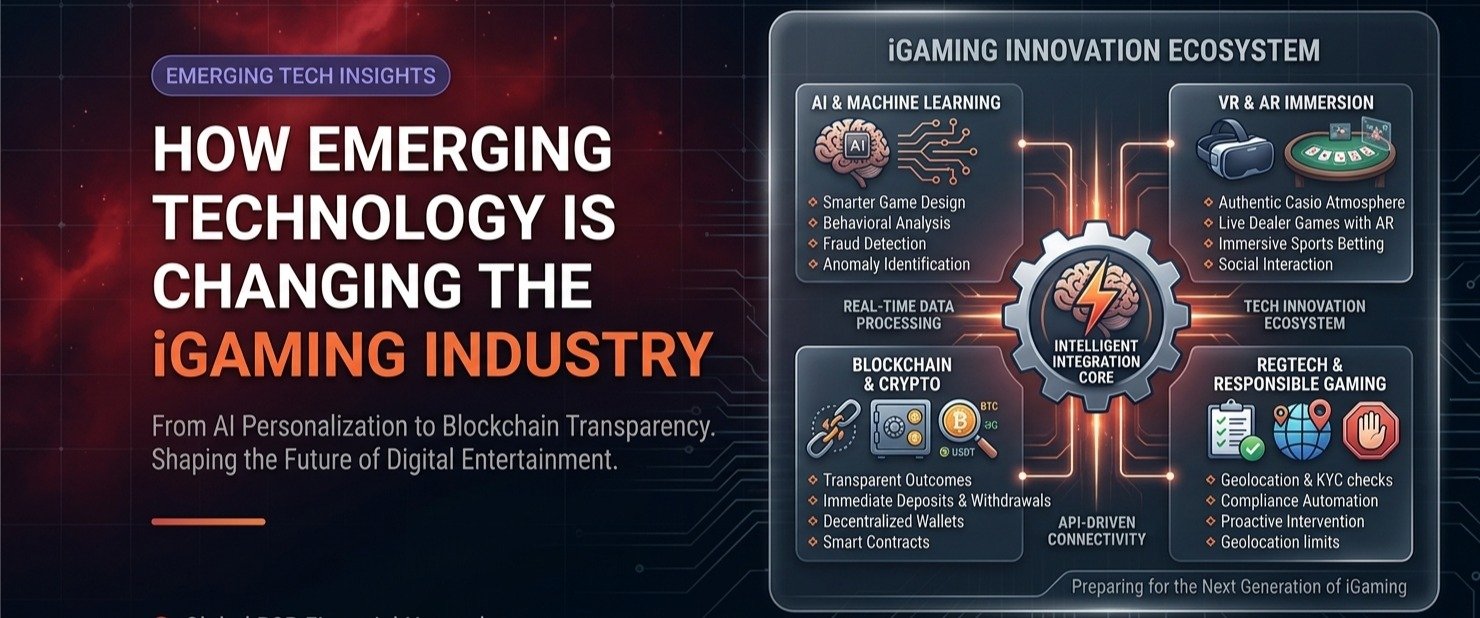
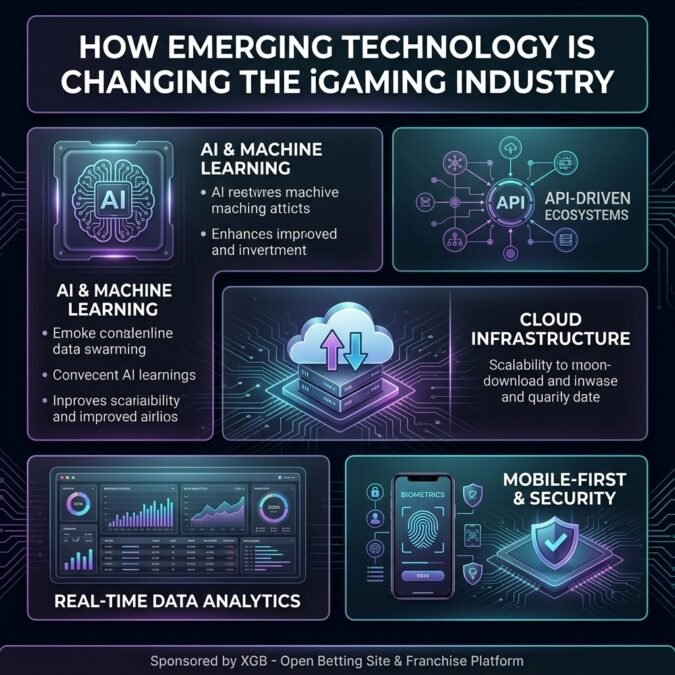
The next stage of iGaming technology is not defined by a single innovation. Instead, it is being shaped by several technologies working together, including artificial intelligence, cloud infrastructure, real-time APIs, advanced analytics, automation, mobile technology, and increasingly flexible integration architectures.
The article is sponsored by XGB เปิดระบบแฟรนไชส์
For businesses considering an iGaming platform, understanding these technologies can help when deciding which systems should be built internally and which capabilities can be connected through technology partners.
Artificial Intelligence in iGaming
Artificial intelligence is becoming increasingly relevant across many areas of digital businesses, and iGaming is one of the sectors where data-driven technology can have a significant impact.
AI can analyze large amounts of information much faster than traditional manual processes. In an iGaming environment, this can support areas such as content recommendations, customer segmentation, operational analytics, and fraud monitoring.
Recommendation technology is particularly interesting because open gaming platforms can contain thousands of titles. Instead of presenting every user with exactly the same content, an intelligent system can analyze behavioral signals and organize relevant content more effectively.
AI can also support customer service by helping automate common questions and direct users toward appropriate information.
The important point is that AI should be integrated into the wider platform architecture rather than treated as an isolated feature.
Machine Learning and Behavioral Analysis
Machine learning can identify patterns within large datasets.
For example, a platform may collect information about game preferences, session behavior, campaign interactions, or customer activity. Machine learning models can use this information to identify patterns that may not be obvious through manual analysis.
This can help businesses understand how different customer groups interact with the platform.
Machine learning can also contribute to anomaly detection. Unusual activity patterns may be identified more efficiently when large quantities of data are continuously analyzed.
However, businesses should ensure that automated systems are implemented responsibly and operate within applicable legal and regulatory requirements.
API-Driven iGaming Ecosystems
One of the most important technological changes in iGaming is the move toward API-driven ecosystems.
Modern platforms frequently need to connect with external systems. These can include game providers, payment services, analytics tools, customer management systems, and other technology providers.
API integration creates a structured way for these systems to exchange information.
For game content, an API can handle processes such as authentication, game launch, wallet communication, bet records, win notifications, and transaction callbacks. Modern iGaming integration guides commonly describe these connections as the foundation for connecting multiple components within a platform.
The benefit is flexibility. A business can potentially add new technology services without rebuilding the entire platform.
Cloud Infrastructure
Cloud computing has also changed how digital platforms are deployed and maintained.
Traditional infrastructure often requires businesses to purchase and manage physical hardware. Cloud infrastructure can provide a more flexible model where computing resources can be adjusted according to requirements.
For an iGaming platform, this can be valuable when traffic levels change.
Scalable infrastructure can help businesses handle increases in activity without relying entirely on a fixed hardware configuration.
Cloud technology can also support distributed teams, automated deployments, system monitoring, backups, and other operational processes.
However, cloud infrastructure still requires careful architecture, security configuration, monitoring, and cost management.
Real-Time Data Processing
Modern users expect digital services to respond quickly.
In an iGaming environment, many events happen in real time. A game session can generate multiple transactions and status updates within a short period.
Real-time APIs and event-driven systems can allow different components to communicate quickly.
For example, a game provider can send information to the platform when a round is completed. The platform can then process the relevant transaction and update the player’s account.
This requires reliable communication between systems and careful handling of failed or repeated requests.
Technical concepts such as idempotency, callbacks, transaction logs, monitoring, and error handling therefore become important parts of platform architecture.
Data Analytics as a Competitive Advantage
Data analytics is increasingly becoming a core business capability.
A modern iGaming platform can generate large amounts of information, but data alone does not create value. Businesses need systems that can organize and interpret it.
Analytics dashboards can provide information about traffic, registrations, game activity, transactions, campaigns, and other business indicators.
When these datasets are combined, businesses can develop a more complete understanding of their operation.
For example, an operator can compare the performance of different game categories rather than looking only at total traffic.
Analytics can also help identify areas where the user journey may need improvement.
Personalization and User Experience
Personalization is another area where technology can change the way iGaming platforms operate.
Users do not necessarily want to search through a huge catalogue to find relevant content. Personalized interfaces can organize information according to preferences, previous interactions, or campaign requirements.
Technology can support personalized game recommendations, content ordering, promotions, notifications, and interface elements.
However, personalization needs to be implemented carefully. Businesses should maintain appropriate controls around data use and ensure that personalization practices comply with relevant privacy and regulatory requirements.
Mobile-First Technology
The smartphone has become one of the most important access points for digital entertainment.
This means that modern iGaming technology needs to consider mobile users at the architecture level rather than simply adapting a desktop website after development.
A mobile-first platform should prioritize fast loading, responsive layouts, simple navigation, readable interfaces, and efficient game access.
Mobile technology can also support progressive web applications and other approaches that provide app-like experiences without requiring a traditional native application.
For businesses, mobile optimization is not simply a design decision. It is part of the overall technology strategy.
Automation Across Platform Operations
Automation can significantly reduce repetitive work.
Instead of manually processing every operational event, businesses can create workflows that automatically perform specific actions when predefined conditions are met.
Automation can be applied to reporting, notifications, account processes, campaign administration, data synchronization, and other operational tasks.
The larger the platform becomes, the more valuable automation can become because manual processes tend to grow faster than teams.
A properly designed automation system can allow businesses to maintain operational efficiency while handling a larger volume of activity.
Security Technology
As technology becomes more connected, security becomes increasingly important.
An iGaming platform may communicate with numerous external services. Every integration creates another technical connection that needs to be managed securely.
API authentication, encryption, access controls, monitoring, logging, and secure credential management are therefore important components of the overall architecture.
Security should also be considered when choosing third-party providers.
Businesses should understand how providers authenticate requests, manage API keys, protect transaction data, monitor systems, and respond to incidents.
The Importance of Integration Standards
As the number of technology providers increases, standardization becomes more important.
Without consistent integration methods, each new provider may require a completely different development process.
An aggregation or normalization layer can simplify this by translating different provider APIs into a more consistent internal format.
This approach allows the platform to work with multiple providers while reducing the complexity of maintaining numerous independent connections.
Modern API comparison frameworks increasingly emphasize not only endpoints but also authentication, testing environments, event handling, versioning, rate limits, monitoring, and data portability.
Responsible Technology Development
Technology should not be separated from responsible business practices.
Businesses operating in regulated markets need to consider applicable licensing requirements, responsible gaming measures, age restrictions, data protection, financial controls, and other legal obligations.
Technology can support these processes, but software alone does not guarantee compliance.
A responsible platform strategy therefore combines technical infrastructure with appropriate legal, operational, and governance frameworks.
Preparing for the Next Generation of iGaming
The future of iGaming technology will likely be defined by connected systems rather than isolated products.
AI may work alongside analytics. APIs may connect multiple game providers. Cloud infrastructure may support scalability. Automation may reduce operational workload. Real-time data may improve decision-making.
The businesses that benefit most from these technologies will not necessarily be those with the largest number of features.
Instead, they will be the businesses that build a coherent technology ecosystem where each component has a clear purpose.
For an iGaming business, technology should ultimately make the platform more scalable, measurable, manageable, and adaptable.
As the industry continues to evolve, investing in flexible infrastructure today can make it easier to adopt new technologies tomorrow.
